

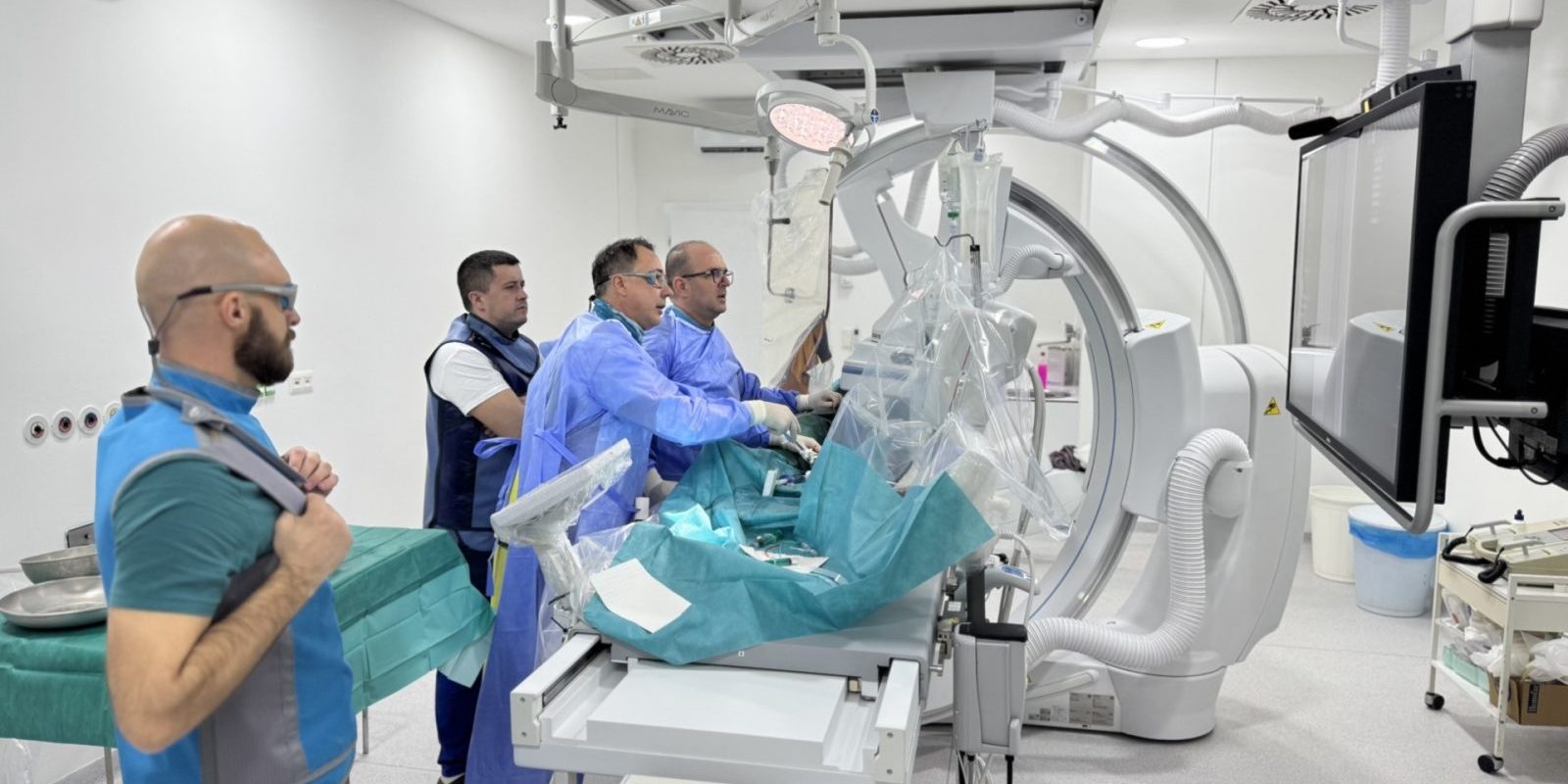
The University Clinical Center Tuzla (UKC Tuzla) continues to advance modern treatment methods in the field of invasive cardiology by establishing the continuous performance of endovascular procedures for the treatment of the peripheral arterial system.
Percutaneous Transluminal Angioplasty (PTA) is a minimally invasive endovascular procedure used to mechanically dilate a narrowed or occluded artery with a balloon catheter. When necessary, a stent is implanted to ensure and maintain long-term patency of the blood vessel.
These interventions represent a significant advancement in the treatment of patients with vascular diseases, particularly those affecting the arteries of the lower extremities. While such procedures were previously performed intermittently at UKC Tuzla, with the support of colleagues from the Clinical Hospital Center Zagreb, they will now be carried out on a continuous basis at the Clinic for Invasive Cardiology of UKC Tuzla.
Acting Head of the Clinic for Invasive Cardiology at the University Clinical Center Tuzla, Assoc. Prof. Dr. Mugdim Bajrić, specialist in internal medicine and subspecialist in cardiology, emphasized the importance of introducing these procedures into regular clinical practice. “There are only a limited number of centers that perform peripheral vascular interventions, while the need for such procedures among patients is extremely high. With our professional staff and technical capacities, we are fully prepared to continuously treat diseases of the peripheral arterial system. The majority of our patients are individuals with diabetes and long- term smokers. Most are over sixty years of age, although this is not always the case, our most recent intervention was performed on a patient around forty years old. Many of these patients suffer from severe pain in the lower extremities and are unable to walk even twenty meters without stopping. By performing these interventions, we prevent disability and amputations, thereby significantly improving the quality of life of our patients,” emphasized Dr. Bajrić.
Dr. Bajrić further emphasized that strong and consistent institutional support is crucial for the long- term success and sustainability of such programs.
“We have excellent support from the management to continue advancing and to provide our patients with the highest standard of care. We already have the necessary equipment, and in the coming period we will focus on strengthening our human resources and involving younger physicians in performing these procedures,” he said.
He pointed out that patients most often present in the acute stage of the disease, which is also the most challenging phase, when they are already at risk of amputation of one or even both lower limbs, requiring urgent medical intervention within a matter of hours. He therefore appealed to patients to seek medical attention in the early stages of the disease, emphasizing that timely diagnosis and appropriate therapy can prevent the development of severe complications.