


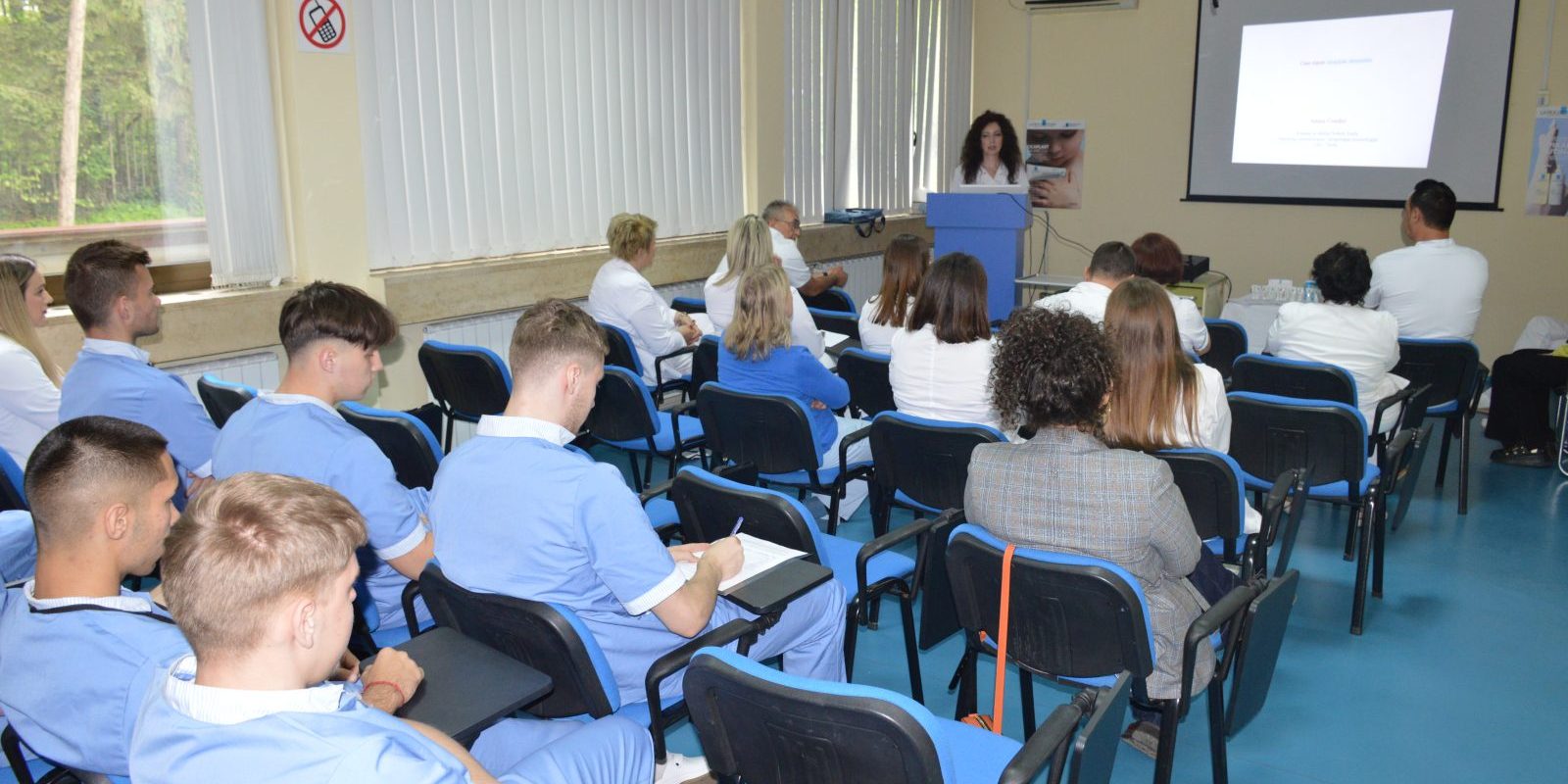
Organized by the Clinic for Skin Diseases at the University Clinical Center Tuzla, the Fourth Atopy School was successfully held, bringing together healthcare professionals, patients, and parents of children living with atopic dermatitis.
Atopic dermatitis is a chronic inflammatory skin disease that most commonly begins in childhood. It is characterized by red, dry, and rough skin changes affecting the face, trunk, and extremities, often accompanied by inflammatory flare-ups and secondary infections. Persistent itching, the hallmark symptom of the disease, can significantly impair quality of life, disrupt sleep, and negatively impact the growth and development of children.
According to Dr. Senada Resić Džananović, Acting Head of the Clinic for Skin Diseases, this year’s program placed special emphasis on the social challenges faced by patients, particularly stigmatization, which can substantially affect their emotional well-being and daily lives.
In addition, participants were introduced to the latest therapeutic advances, with particular attention given to treatment outcomes in patients enrolled in the therapeutic protocol using the medication Rinvoq.
This year’s guest lecturer was once again Professor Almira Ćosićkić, Head of the Department of Rheumatology, Allergology and Immunology at the Clinic for Children’s Diseases, UCC Tuzla. In her lecture, she highlighted the importance of early diagnosis and an individualized therapeutic approach in the management of atopic dermatitis.
Dr. Senada Resić Džananović emphasized the primary mission of the Atopy School: “The goal of the Atopy School is to educate parents and patients about proper daily care of atopic skin in both children and adults. We are committed to providing timely information and continuous education for patients, parents, and caregivers. Early recognition, together with appropriate and individualized treatment protocols developed by specialists, represents the foundation of successful treatment and long-term disease control.”
Dr. Resić Džananović further explained that atopic dermatitis is a multifactorial disease resulting from the interaction of genetic predisposition, impaired epidermal barrier function, and dysregulation of the immune response.
It is estimated that approximately 20 percent of the global population experiences some form of atopic dermatitis during their lifetime, with the condition most commonly affecting children and adolescents.