

On the occasion of World AIDS Day, observed on December 1, the healthcare staff of the Clinic for Infectious Diseases, University Clinical Center Tuzla (UKC Tuzla) organized a series of activities aimed at raising public awareness about the importance of prevention.
HIV (human immunodeficiency virus) weakens the immune system, making individuals more susceptible to opportunistic and other infectious diseases. Without appropriate treatment, HIV infection can progress to its final stage- AIDS.
World AIDS Day is a global initiative dedicated to raising awareness of HIV and AIDS, as well as supporting people living with HIV and their families. Each year, United Nations agencies, governments, and civil society organizations join efforts to run campaigns focused on key HIV-related issues.
This year, the Clinic for Infectious Diseases at UKC Tuzla is marking this important day by organizing expert lectures and offering free counseling and testing for HIV, Hepatitis B, and Hepatitis C.
As part of the activities, on December 1, the Counseling Center for Voluntary, Confidential, and Free Counseling and Testing for HIV and Hepatitis C at UKC Tuzla will provide free, completely anonymous, 24- hour testing for all citizens.
For healthcare professionals, the Clinic for Infectious Diseases will hold an expert lecture titled “Overcoming Challenges: Transforming the Response to AIDS.”
According to Prof. Dr. Rahima Jahić, Head of the Clinic for Infectious Diseases, decades of dedicated work and solidarity have reduced the annual number of new HIV infections and AIDS- related deaths to their lowest levels in more than 30 years. However, as Prof. Dr. Jahić emphasizes, this decline is still not sufficient to bring an end to AIDS as a public health threat.
The global HIV Programme set the goal of ending AIDS by 2030, and in 2024 the international response was closer than ever to achieving this milestone. Yet, due to the many challenges affecting numerous communities, the Programme now finds itself at a critical turning point, marked by growing instability and pressure on multilateral cooperation.
“UNAIDS modelling shows that if funding is permanently reduced, we could see an additional 6 million HIV infections and 4 million AIDS-related deaths by 2029. The AIDS response may be facing a crisis, but transformation is still within our reach, though it cannot happen overnight. Global solidarity and renewed commitment from funding partners will be essential as countries plan and implement sustainable transitions toward self- financing.
A new approach has been proposed as indicator- driven HIV testing, which should become an additional component of a comprehensive HIV testing strategy. HIV indicator conditions are symptoms that occur more frequently in individuals with undiagnosed HIV infection than in those without HIV,” said Prof. Dr. Jahić during her lecture.
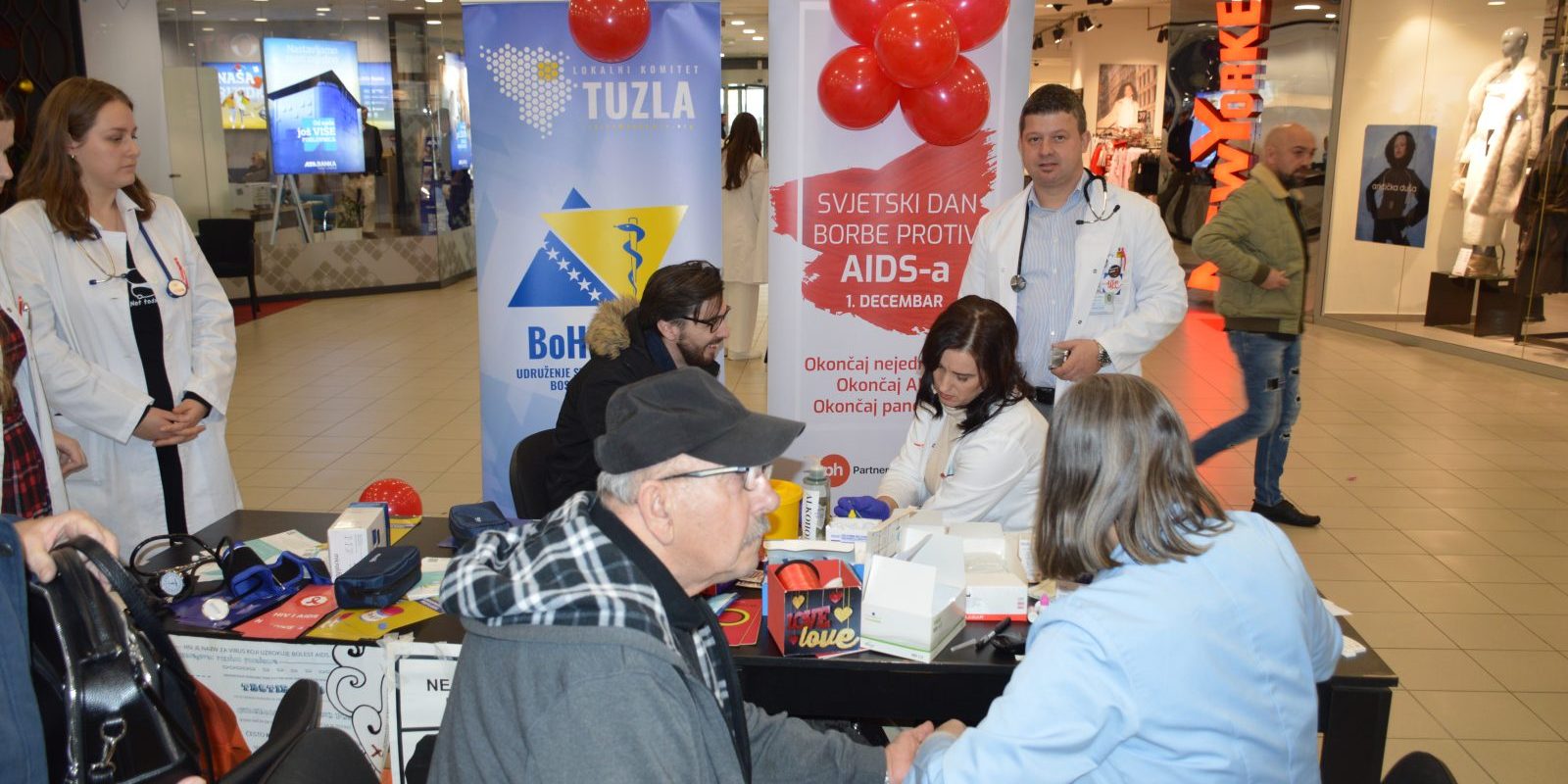
Free testing for HIV, Hepatitis B, and Hepatitis C was also organized at the Tuzlanka shopping mall, where, according to Dr. Denis Žepić, infectious disease specialist at the Clinic for Infectious Diseases of the University Clinical Center Tuzla, citizen turnout was exceptionally high and all available rapid tests were used.
“In protecting people living with HIV, early diagnosis remains one of the greatest challenges. The recommendation for routine HIV testing aims to reduce the number of late diagnoses and prevent disease progression. Once HIV is diagnosed, patients are prescribed combination therapy, as their immunity may already be compromised, increasing the risk of other illnesses.
It is important to emphasize that the HIV virus itself does not directly cause disease, and thanks to modern treatment, people living with HIV can lead long, healthy lives, work, start families, and be fully integrated into society,” emphasized Dr. Žepić.