

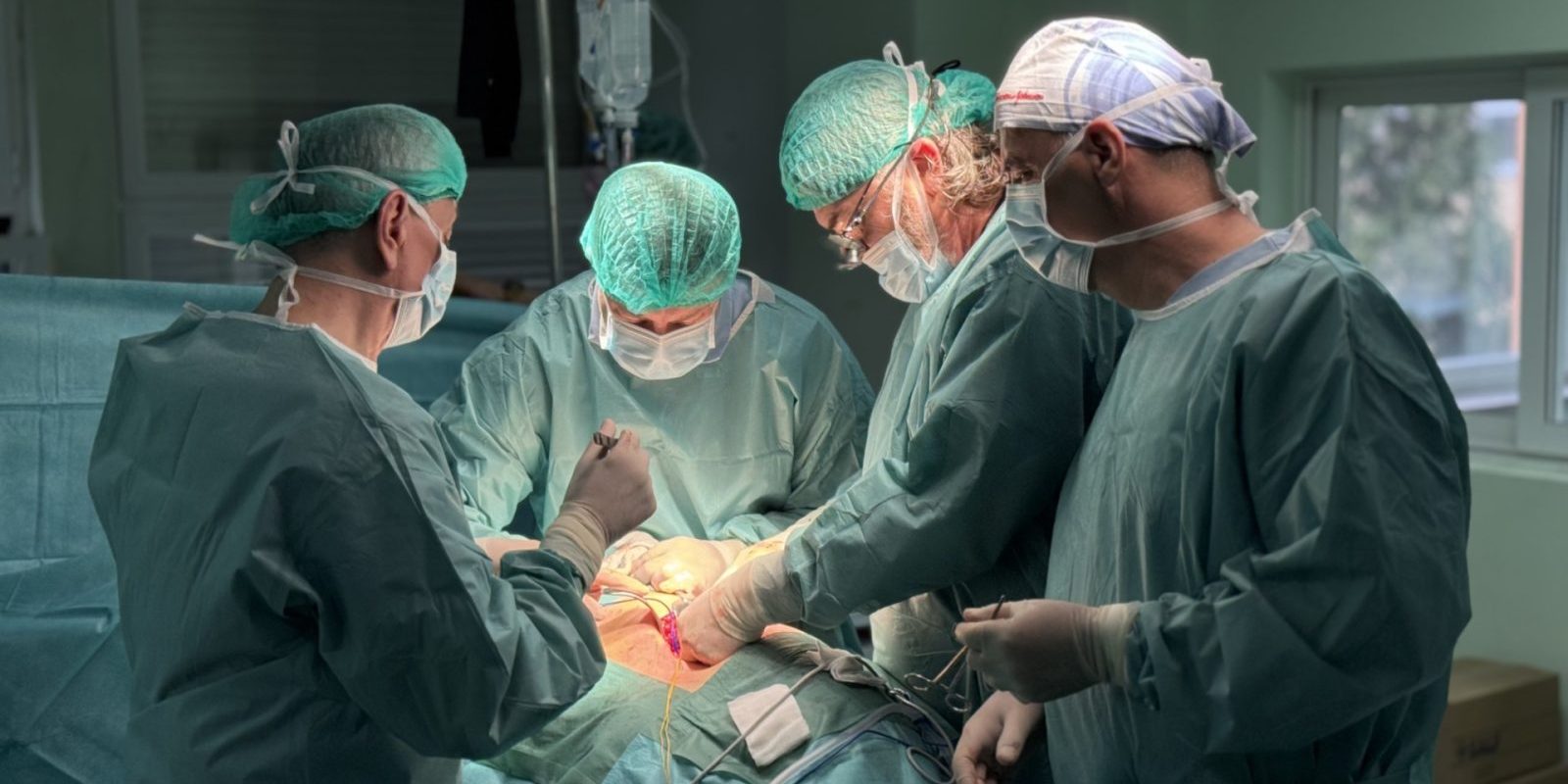
The multidisciplinary transplant team at the University Clinical Center Tuzla (UKC Tuzla) has successfully performed its second living- related kidney transplant of the year, in which a mother donated a kidney to her daughter.
Head of the Clinic of Urology, Assoc. Prof. Dr. Samed Jagodić, expressed full satisfaction with the outcome of the procedure.
“Today, we performed the second kidney transplant of this year. It was a living- related transplant, with a mother donating a kidney to her daughter. Both surgical procedures proceeded smoothly. The health condition of both the donor and the recipient is stable. In the recipient, the transplanted kidney began functioning immediately, urine output was observed as soon as blood flow was established, which makes us completely satisfied with today’s procedure,” said Dr. Jagodić.
Dr. Jagodić further emphasized that the early function of the transplanted organ is an extremely important indicator of both surgical success and a favorable postoperative course. In this case, the immediate function of the kidney was confirmed already in the operating room, representing a highly positive prognostic sign.
Head of the Department of Kidney Transplantation, Dr. Rasim Agić, specialist in urology, emphasized that every successfully performed transplant is the result of strong teamwork and continuous support from the management of UKC Tuzla. He highlighted that transplantation is a highly complex and carefully coordinated process involving numerous experts from various medical fields. “Another living- related kidney transplant was successfully performed this year. Procedures of this kind are the outcome of the dedicated work of a large multidisciplinary team. We are particularly pleased that younger colleagues from the Clinic of Urology actively participated in the surgical procedure, as this ensures the continuity and long-term sustainability of the transplantation program at UKC Tuzla,” said Dr. Agić.
Addressing the complexity of the transplantation process, Dr. Agić explained that organ and tissue transplantation requires a comprehensive multidisciplinary approach. Significant contributions are made by physicians and nursing staff from the Clinic of Anesthesiology and Resuscitation, the Clinic of Internal Medicine, the Polyclinic of Transfusion Medicine, the Polyclinic of Laboratory Diagnostics, the Hospital Pharmacy, and the Institute for Psychological and Social Protection, as well as by biologists and immunologists.
He further noted that the surgical and anesthesiology teams, together with nurses from the Clinic of Urology, play an indispensable role in the preparation, execution, and postoperative care of transplant patients, ensuring both procedural success and patient safety throughout the entire treatment process.