


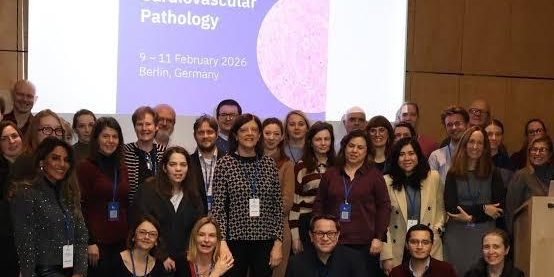
Physicians from the University Clinical Center Tuzla (UKC Tuzla) took part in the international workshop “Grey Zones in HFpEF Prevention and Diagnosis,” held in Florence and organized by leading international experts in the field of heart failure.
The meeting brought together prominent clinicians and researchers from Europe, the United States, Canada, and Japan, focusing on current challenges in the prevention, diagnosis, and phenotyping of HFpEF (heart failure with preserved ejection fraction).
Prof. Dr. Larisa Dizdarević-Hudić, specialist in internal medicine and Head of the Department of Cardiology at the University Clinical Center Tuzla, participated as an invited lecturer and as a member of the European Scientific Committee for HFmrEF and HFpEF.
Professor Dizdarević-Hudić delivered a lecture titled “Echocardiography in HfpEF- Cornerstone with Cracks,” highlighting the strengths and limitations of echocardiographic assessment in this complex clinical entity.
The workshop aimed to present the latest scientific insights and clinical approaches in the prevention and diagnosis of HFpEF (heart failure with preserved ejection fraction).
Key discussions focused on the early detection of HFpEF, the role of comorbidities, systemic inflammation and congestion, as well as the importance of clinical context and real world approaches to patient care. Particular attention was given to the limitations of existing diagnostic algorithms and the need for an individualized, phenotype- driven approach in everyday practice.
Participants concluded that HFpEF represents a highly heterogeneous clinical syndrome that requires the integration of clinical, laboratory and imaging parameters. There is a clear need for more flexible and practically applicable diagnostic models, while real life experience, resource availability and cost effectiveness remain essential elements of routine clinical decision making. It was emphasized that prevention strategies must begin earlier, be multidisciplinary in nature, and further strengthen the connection between scientific evidence, clinical guidelines and everyday practice across different healthcare systems.
As an outcome of the workshop, the development of two international consensus papers, focused on HFpEF prevention and diagnosis, is planned, along with the continuation and expansion of international scientific and clinical collaboration.