

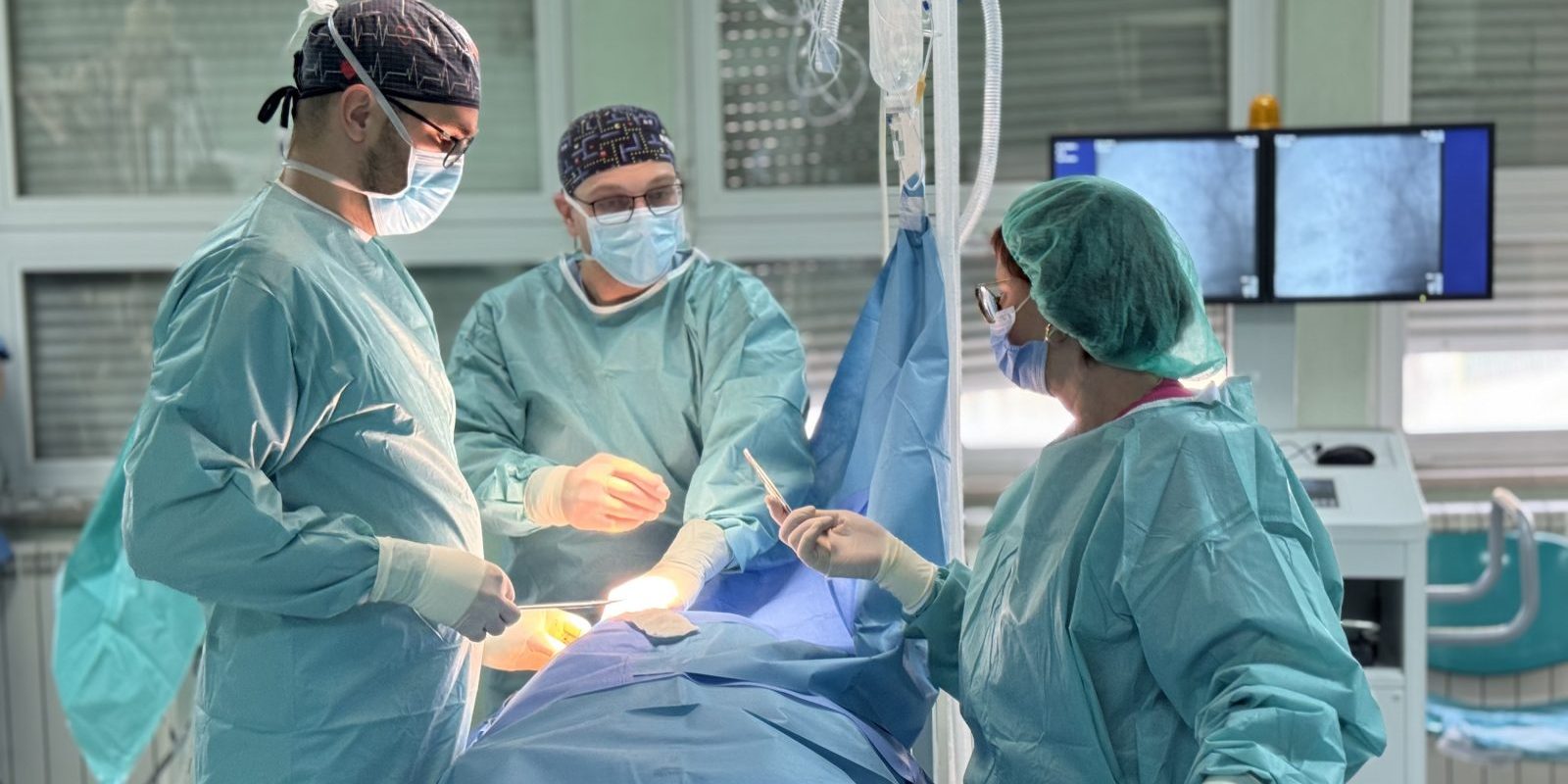
During the past year, more than 200 procedures for the implantation of port catheters were successfully performed at the Clinic for Thoracic Surgery of the University Clinical Center Tuzla.
The introduction of this procedure began last year following the specialized training of the Clinic’s healthcare staff, conducted under the mentorship of Prof. Dr. Ercan Kocakoc, interventional radiologist at the Medical Park Healthcare Group in Istanbul.
The placement of a subcutaneous port catheter offers numerous benefits to patients, including a reduced risk of infections, long-term vascular access, and greater comfort in everyday activities without significant limitations.
The implantation procedure is performed under local anesthesia. According to Assoc. Prof. Dr. Nusret Ramić, Head of the Clinic for Thoracic Surgery, one part of the port catheter is positioned beneath the skin, while the other is inserted through the jugular vein into the superior vena cava, the largest vein in the human body. “The port catheter provides a reliable, safe, and stable venous access. It simplifies treatment, eliminates repeated needle insertions and associated discomfort, and enables therapies that previously required peripheral veins to be administered through a single, secure central line. Patients are able to live and work freely, without the difficulties associated with peripheral intravenous lines,” emphasized Assoc. Prof. Dr. Ramić.
The need for a port catheter is particularly pronounced among oncology patients and individuals facing serious health conditions, such as those undergoing cancer treatment, long-term intravenous therapy, kidney dialysis, or requiring regular blood transfusions.
According to Prof. Dr. Šefika Umihanić, Head of the Clinic for Oncology and Radiotherapy at the University Clinical Center Tuzla, the introduction of the port system represents a significant step forward in improving the quality of care for oncology patients. “This procedure enables a safer, more durable, and more comfortable administration of therapy, reducing pain, stress, and the risk of complications associated with frequent venous punctures. Our goal is to provide patients with modern treatment standards, greater safety, and dignity throughout the entire course of therapy,” emphasized Prof. Umihanić.
She further noted that a clinical psychologist has been engaged at the Clinic for Oncology and Radiotherapy, significantly enhancing the comprehensive care provided to oncology patients.
“Psychological support helps patients and their families cope more effectively with the stress, fear, and challenges associated with diagnosis and treatment. In addition to modern medical therapy, our aim is to provide professional emotional and mental health support, as we believe that caring for mental well-being is just as important as caring for physical health. With this step, we reaffirm the importance of a multidisciplinary approach in the treatment of our patients,” concluded Prof. Dr. Šefika Umihanić.
Patient Muris Nišić shared his personal experience, highlighting the importance of port catheter implantation from a patient’s perspective: “A port catheter brings significant benefits to any patient who requires frequent therapy, in my case, every 14 days. For me, it has truly become a lifesaver. Due to the large number of previous punctures, my veins were severely damaged. With the port catheter, my hands are now free, I can move around, and I am no longer constantly confined to a hospital bed,” said Nišić.