

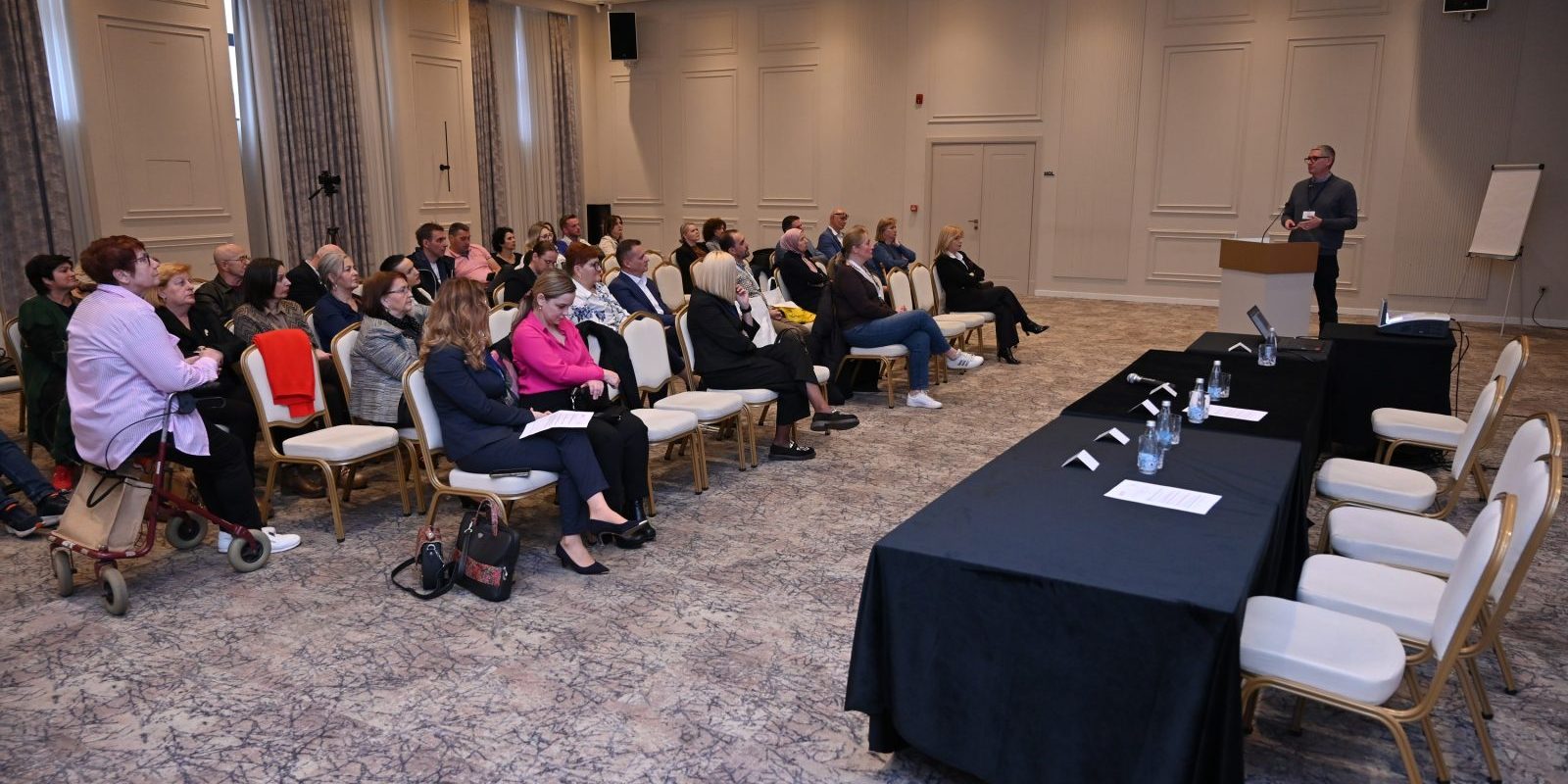
A multidisciplinary approach to the treatment of multiple myeloma was the focus of a meeting held yesterday, gathering patients and healthcare professionals involved in the management of hematological diseases. The event was organized by the Association “Myeloma in BiH” in collaboration with the Clinic for Hematology and Hematopoietic Stem Cell Transplantation of the Public Health Institution University Clinical Center Tuzla (the UKC Tuzla).
The aim of the meeting was to strengthen patient support by providing insight into current diagnostic and therapeutic guidelines, while emphasizing the importance of early disease detection and a multidisciplinary approach to improve patient outcomes.
According to the Head of the Clinic for Hematology and Hematopoietic Stem Cell Transplantation at the UKC Tuzla, Prim. Asst. Dr. Azra Jahić-Žugić, the cooperation between the Clinic and the Association “Myeloma in BiH” is at a very high level. This strong collaboration contributed to the organization of the expert meeting, which brought together not only patients with multiple myeloma, but also medical professionals from the UKC Tuzla.
“We have gathered with the aim of providing our patients with support through education about this disease, its progression, diagnostic guidelines, and modern treatment options for multiple myeloma. When we speak about multiple myeloma, we are referring to a highly malignant bone marrow disease which, despite all available modern therapies, remains incurable. However, with today’s advances in treatment, including immunotherapy and other biological therapies, we are able to keep the disease under control, significantly prolonging patient survival,” said Prim. Assoc. Prof. Dr. Azra Jahić-Žugić.
The Association “Myeloma in BiH” is dedicated to supporting patients with multiple myeloma, myelodysplastic syndrome, and other rare hematological diseases, as well as their families across Bosnia and Herzegovina. Founded at the end of 2016, the Association has been actively operating for nearly a decade.
Zlatan Planinčič, President of the “Myeloma in BiH” Association, emphasized the need for Bosnia and Herzegovina to improve access to innovative therapies, highlighting that medicines available on the global market should be more accessible to patients in the country.
“As an association, we aim to highlight the importance of timely diagnosis, access to modern therapies, as well as the need for psychological support for patients and their family members. We also want to send a clear message from this meeting to all patients that they are not alone. The Association is here to provide information, offer support, and facilitate connections between patients and healthcare professionals,” emphasized Planinčič.
Following the professional meeting, participants had the opportunity to visit the International Portrait Gallery Tuzla, where a symbolic red illumination was organized as a strong gesture of support for patients with multiple myeloma, myelodysplastic syndrome, and other rare blood diseases, as well as their families.