

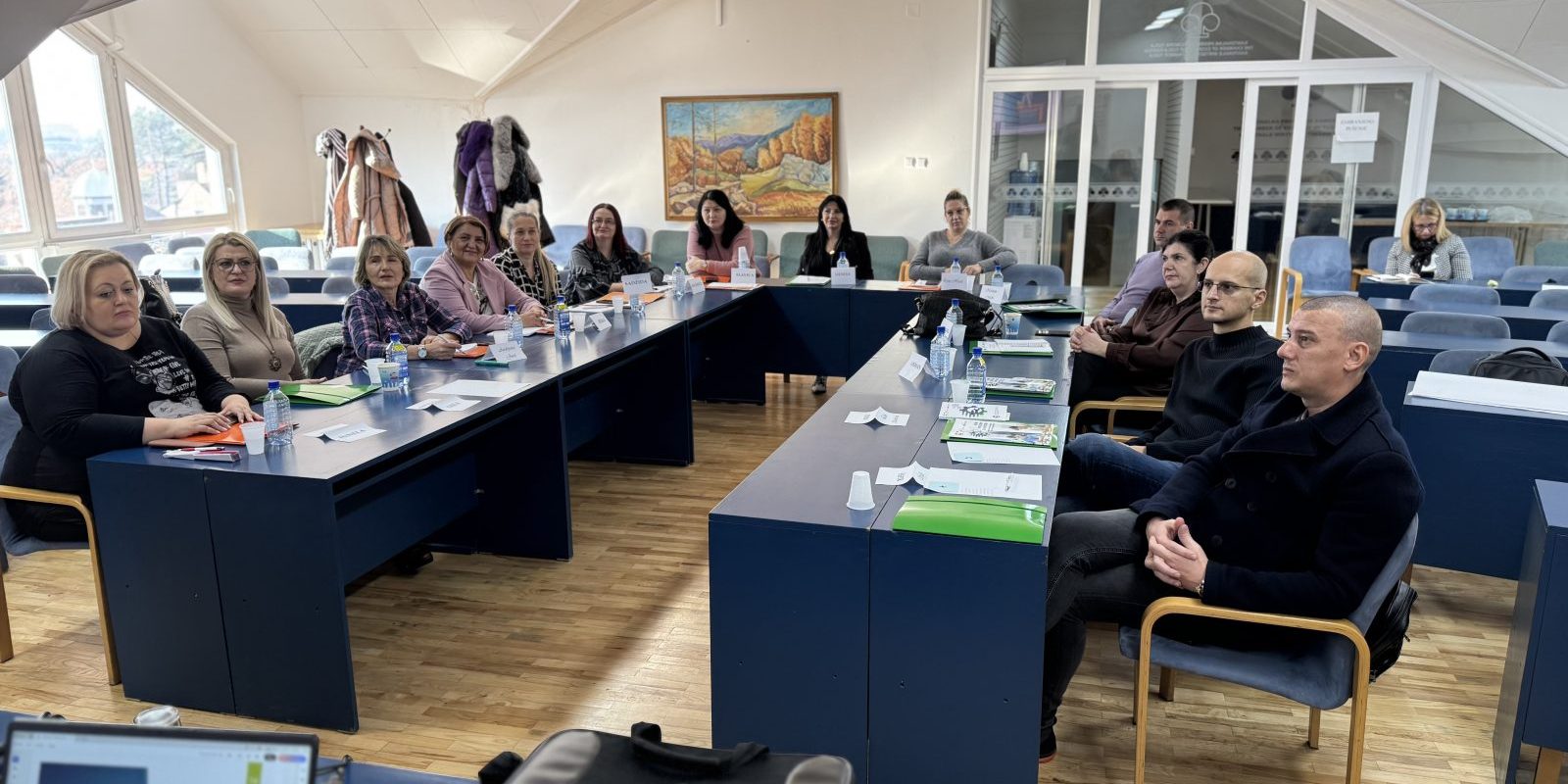
The University Clinical Center Tuzla (UKC Tuzla) actively participated in the project “Training for Practical Training Mentors at Business Entities,” implemented by the Cantonal Chamber of Commerce of Tuzla. UKC Tuzla’s involvement in this initiative represents a significant step forward in strengthening the quality and consistency of practical training for students of secondary medical schools.
With its highly qualified professional staff and well-developed infrastructure, UKC Tuzla plays a crucial role in the education and hands-on training of future healthcare professionals. Through certified mentors, students are provided with structured guidance, enabling them to acquire essential practical skills in a real clinical environment.
As part of the project, the results of the Study on Monitoring, Improvement and Promotion of Secondary Vocational Education in Tuzla Canton were also presented. For the first time, the study offered a comprehensive and systematic overview of the implementation of practical training at employer institutions.
Nikola Čiča, the author of the study, explained that the research included 112 students who completed practical training across various institutions. The findings demonstrated a high level of employer satisfaction, while also clearly identifying opportunities for further improvement and the continued development of dual education models.
The importance of active involvement by healthcare institutions in this process is particularly highlighted through the participation of the University Clinical Center Tuzla, which is currently the first healthcare institution in Tuzla Canton to have as many as 25 trained practical training mentors, with plans for further expansion of this number.
Šefik Husić, MSc in Nursing and Assistant Director for Nursing at the University Clinical Center Tuzla, emphasizes that mentoring in the education of secondary medical school students is highly beneficial for both UKC Tuzla and medical schools. According to him, the University Clinical Center gains a more professionally trained and educated workforce, which is of great importance not only for UKC Tuzla but also for the future development of other healthcare institutions in Tuzla Canton. He further points out that through this project, schools gain recognizable and well- prepared teaching support, while students acquire specific medical and technical skills during their education. At the same time, students benefit from higher quality practical training, enabling them to develop competencies they will be able to apply effectively in their future professional work.
Speaking about the broader impact of the project, Nedret Kikanović, President of the Cantonal Chamber of Commerce of Tuzla, stated that the results of the study represent an important foundation for the continued development of secondary vocational education. He emphasized that the collected data are of exceptional value for defining future guidelines related to practical training. Kikanović also noted that this large and significant project was successfully implemented thanks to the strong support of partner institutions, including GIZ, the Embassy of Switzerland, the Embassy of Germany, the Ministry of Education of Tuzla Canton, and the Pedagogical Institute, with the Cantonal Chamber of Commerce Tuzla serving as the project implementer.
According to Zlatko Ibrišimović, expert advisor for secondary vocational education at the Pedagogical Institute of Tuzla Canton, the project represents the beginning of a long- term process in which practical teaching is being addressed in a systematic and structured manner for the first time. As Ibrišimović emphasizes, the full impact and quality of all project components will become evident in the period ahead.
Assistant Minister of Education of Tuzla Canton, Asim Bojić, highlighted that the Ministry of Education and Science of Tuzla Canton had previously worked on improving regulations related to the implementation of practical training. These efforts, he noted, created the necessary preconditions for the education and certification of mentors in business and healthcare institutions. Such an approach enables a clearer assessment of achieved results and provides a solid foundation for defining future objectives.
The study findings confirm that practical training holds significant potential for further development, while the dual education model is gradually gaining recognition and becoming increasingly established in Tuzla Canton.
The active involvement of the UKC Tuzla in this process further underscores the commitment of the healthcare system to working in partnership with educational institutions to ensure the development of highly qualified, competent, and professionally prepared medical staff.