


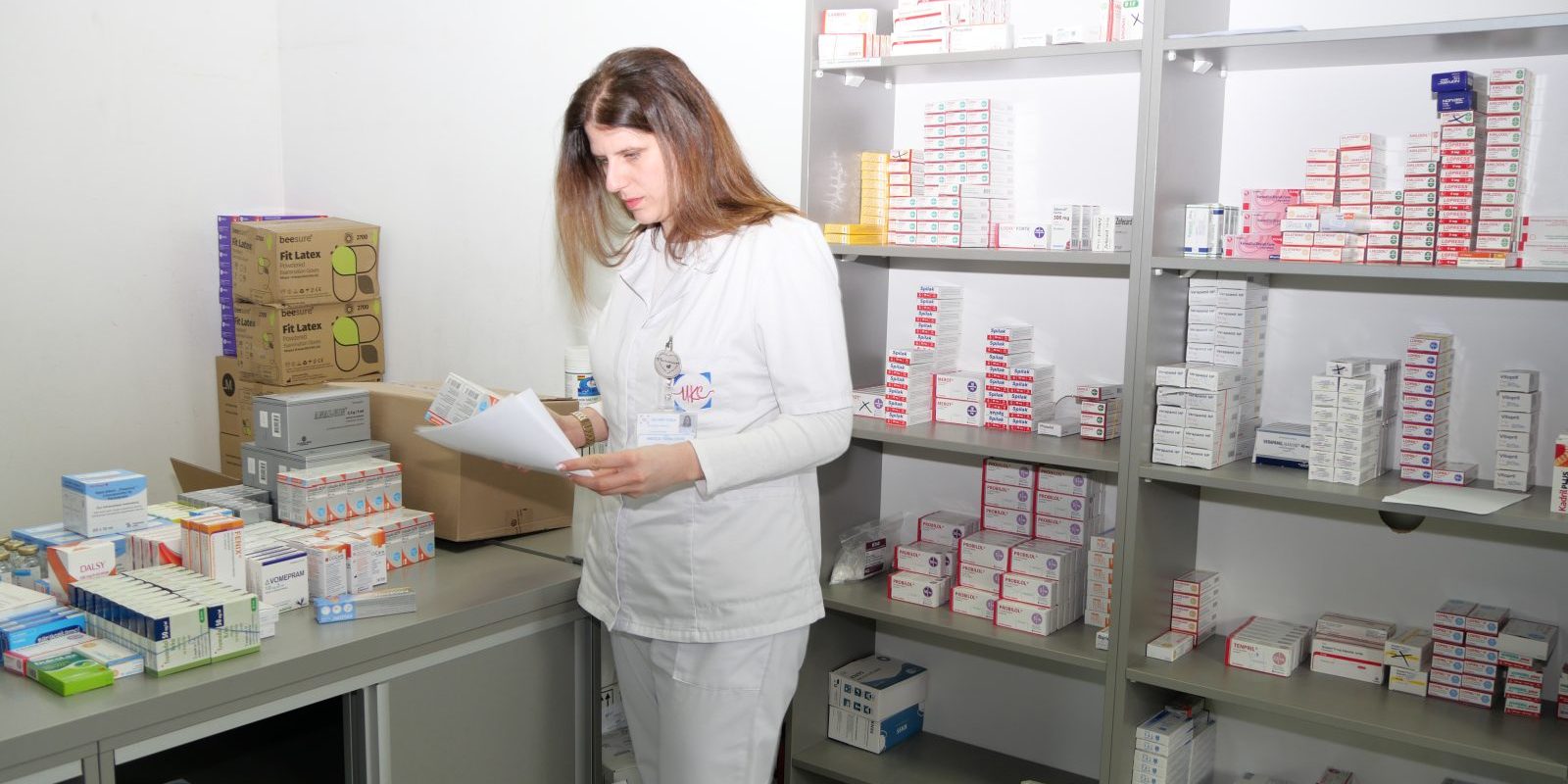
At the University Clinical Center Tuzla (UKC Tuzla), treatment modalities, including chemotherapy, are determined individually for each patient. Decisions are made through a multidisciplinary consultation, after which the proposed therapy is submitted for approval to the Committee of the Federal Institute of Health Insurance and Reinsurance.
Once the Committee approves the requested therapy, the patient’s written consent is forwarded to the UKC Tuzla. Based on this approval, the hospital pharmacy submits a formal request to the Federal Institute of Health Insurance and Reinsurance.
The Federal Institute is responsible for announcing public procurement tenders for these medicines. Following the completion of the procurement procedure and based on the submitted purchase order, the Federal Institute forwards a request to the contracted supplier. The supplier then delivers the approved medicines to the UKC Tuzla.
It is important to emphasize that the issue of drug shortages is not limited to Bosnia and Herzegovina, but represents a broader regional and global challenge affecting healthcare systems worldwide.
According to the Head of the Hospital Pharmacy at the UKC Tuzla, Ančica Topalčević, MPharm, the Federal Institute of Health Insurance and Reinsurance, in addition to providing cytostatics for oncological and hematological patients, also ensures the supply of medicines for dialysis and transplant patients, patients with Crohn’s disease, pulmonary hypertension, neurological diseases, hepatitis, and AIDS. The Institute also supplies medicines for ophthalmological patients with diabetic macular edema, as well as for patients treated at the Center for Rare Diseases, including those with cystic fibrosis and spinal muscular atrophy.
“The Hospital Pharmacy of the UKCTuzla acts as an intermediary in the procurement of medicines between the Federal Institute of Health Insurance and Reinsurance and the competent departments and clinics of the UKC Tuzla. The issue of cytostatic shortages is not limited to Bosnia and Herzegovina; it represents a broader challenge, as pharmaceutical manufacturers must supply an increasingly large market,” explained Topalčević.
She emphasized that the UKC Tuzla is currently facing a shortage of approximately seven medicines from the list of the Federal Health Insurance and Reinsurance Fund, not all of which are cytostatics. “For some medicines, the issue lies with the manufacturer, while for others it may be related to contractual matters, such as the termination of a contract, after which we must wait for the announcement and completion of a new procurement procedure. If the Institute has sufficient quantities of medicines available under an active contract, it orders the full required amount from wholesalers. However, when quantities are limited, and considering that the Institute supplies other clinical centers as well, the available medicines are distributed in proportion to the number of patients,” she added.
Based on previous experience, once the supply of one medicine is resolved, shortages may arise with another. “We hope that the time will come when all medicines will be continuously available to patients and that we will no longer face supply shortages,” Topalčević concluded.
Currently, the following medicines from the Health Insurance and Reinsurance Fund of the Federation of Bosnia and Herzegovina list are unavailable at the University Clinical Center Tuzla:
Entecavir (tablets), Nilotinib 150 mg (capsules), Cabazitaxel (ampoules), Lenalidomide 25 mg, Fluorouracil (ampoules) 250 mg and 500 mg, Anastrozole (tablets), Abiraterone Accord 500 mg (tablets), and Fulvestrant 250 mg (injection).